
Copper and nickel prices could double over the next decade, driven by the demand in construction, energy transition and electrification, a new report by global financial services firm Coface suggests.
Aluminum, copper and nickel could face supply deficits averaging around 10% of demand by 2035 as miners struggle to bring enough new production online.
Coface’s industrial metals report is based on an analysis of production, consumption and price data from the London Metal Exchange, U.S. Geological Survey, World Bank and IEA.
“US tariffs are part of a much larger shift in how metals are traded,” said Marcos Carias, North America economist at Coface. “Governments have been restricting metals trade for years, and the US measures add to that pressure at a time when supply is already falling behind demand.”
The imbalance could result in a prolonged bull market for industrial metals as clean-energy technologies, data centres, electric vehicles, battery storage and grid expansion consume more material while miners struggle to bring new supply online. Unlike short-lived commodity cycles, Coface argues the pressure reflects structural constraints that higher prices alone may not quickly resolve.
Supply squeeze
Until 2035, supply is expected to increase by 1% for copper, 1.5% for nickel, and only 0.4% per year for aluminum. Demand, by comparison, is expected to grow about 1.8% annually for all three metals if consumption follows the average pace of the past decade. Under a net-zero emissions scenario, growth accelerates to around 2.2% for aluminum and copper and 4.5% for nickel.
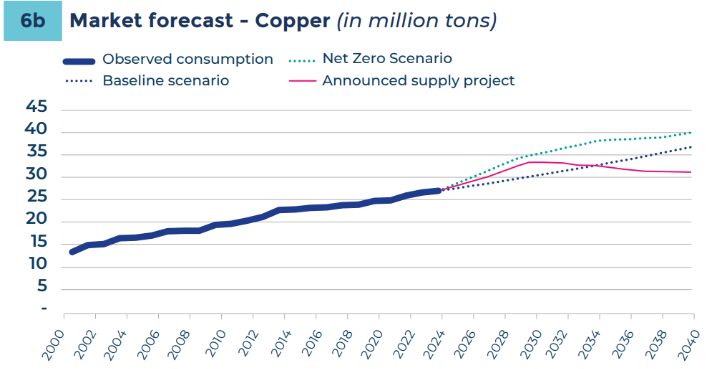
As demand for these metals rises due to the energy transition, new data center infrastructure, electrical vehicles and battery storage and grid expansion, Conface analysts say supply won’t be able to keep up.
While price increases may appear cyclical, they say the pressures building across metal markets reflect deeper structural shifts affecting both demand and supply, and that will help build a new bull market in the coming decade.
One of the reasons Coface attributes to this tension is how mining developments are taking longer to get permitted, also delaying production that could feed the supply chain.
Trade restrictions are adding another layer of pressure. Coface counted 1,138 import and export restrictions on minerals in force, more than triple the 357 recorded a decade earlier. US tariff measures introduced over the past year have further tightened the market.
“For manufacturers in the US, Canada and Mexico, that means planning for higher metal costs over the long term instead of waiting for a trade deal to bring prices back down,” Carias said.
Uncertain exploration outcomes, rising processing times for new mining projects of 15 to 20 years, weak incentives to expand mining capacity and value being captured in refining and processing rather than extraction, all contribute to a structural compression of ore supply, the analysis showed.
Future prices will depend not only on the demand growth, but also on the ability of each metal’s supply chain to respond to emerging constraints, analysts said.
Falling short
The energy transition is amplifying existing structural tensions as low-carbon technologies claim a growing share of metals consumption.
Clean-energy technologies could account for approximately 35% of global copper and nickel demand by 2035.
Coface estimates that copper could come up short by as much as 17%. The refined copper deficit could go from 1.5 million to 6.5 million tons by 2035, about 11% of projected demand, and under a net-zero scenario, the gap could reach 17%.
Under a net-zero scenario, the refined nickel market could face a deficit of almost 35% of projected demand, driven largely by battery manufacturing.
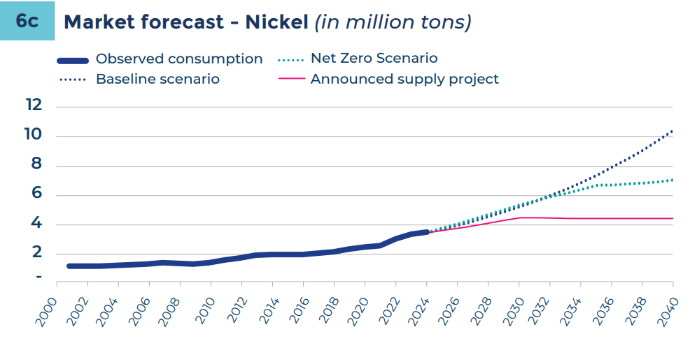
Coface projects an aluminum deficit ranging from 5 to 15 million tons, equivalent to approximately 10% of projected demand, but differently from copper and nickel, it will be driven by industrial and energy constraints rather than resource scarcity.
When supply constraints are driven by production costs or investment incentives, rising prices can stimulate additional production capacity and accelerate market rebalancing. However, when there are limitations in the availability of raw materials, higher prices are not enough to unlock additional supply, resulting in long-term price pressure, the report showed.